Mark 11:27-33 And they came again to Jerusalem. And as He was walking in the temple, the chief priests, and scribes, and elders came to Him, 28 and began saying to Him, “By what authority are You doing these things, or who gave You this authority to do these things?” 29 And Jesus said to them, “I will ask you one question, and you answer Me, and then I will tell you by what authority I do these things. 30 “Was the baptism of John from heaven, or from men? Answer Me.” 31 And they began reasoning among themselves, saying, “If we say, ‘From heaven,’ He will say, ‘Then why did you not believe him?’ 32 “But shall we say, ‘From men’?” —they were afraid of the multitude, for all considered John to have been a prophet indeed. 33 And answering Jesus, they *said, “We do not know.” And Jesus *said to them, “Neither will I tell you by what authority I do these things.”
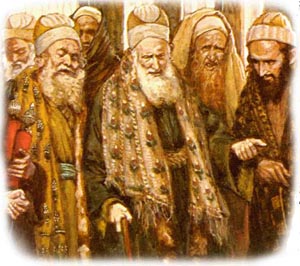 The scribes, elders, and chief priests cannot believe Jesus’ audacity. They think, “Who is this itinerant preacher who thinks he can come in here and cause a scene in the temple?” So that’s what they ask Him: “Who do you think you are? We are the authorities here; if anything is wrong in the temple, we’ll take care of it. Who gave you the right to come in here and do this?” Understand that they’ve already answered the question in their own minds: No one gave Jesus this right; in their minds, He’s a nobody, stepping on their turf.
Think about this: do the chief priests and elders have a right to ask Jesus this question? Perhaps not in these demeaning words, and probably not in the tone of voice they used, but surely the religious authorities do have a right to ask about Jesus’ authority. They can’t let every Tom, Dick, and Harry (or every Nathaniel, Joshua, and Zechariah) enter the temple and turn over tables.
So why does Jesus avoid answering their question? Why doesn’t he simply say, “My authority is from God”?
The reason Jesus doesn’t answer is that these men are not interested in the truth. And Jesus exposes their lack of interest through the question He asks. In effect, He asks, “You ask me about my authority; let me ask you about John. Was his authority from God or from man?”
Look again at verses 31 and 32. Are they concerned at all with the truth? In their discussions, does the true source of John’s baptism arise at all? No. Their entire discussion is framed in terms of the response of the crowds. They care not one whit for the truth, only for the political ramifications of their reply.
So Jesus’ answer to them is this: “You don’t care for the truth, so why should I answer you? But if you do care, remember: The source of my authority is the same as the source of John’s — as he himself indicated.”
The positive lesson for us from this interchange is this principle:
The fruitbearer speaks the truth, regardless of expected response. We must not be like the politicians of ancient times (the chief priest, scribes, and Pharisees), nor the politicians of modern times, scripting our remarks to play to whatever audience is in front of us. If we are to bear fruit that lasts, if we are to take on the character of Jesus, we must be willing to speak the truth of the gospel, whether it is popular or not, whether we are in the midst of great revival or bitter persecution, whether it will lead to our being honored or our being put to death. We must be men and women of our word, as James reminds us:
But above all, my brethren, do not swear, either by heaven or by earth or with any other oath; but let your yes be yes, and your no, no; so that you may not fall under judgment. (James 5:12 NASB)
To read the rest of the sermon, click here:
 Knowing God through His Word ... Day by Day